
Jaw Crusher or Impact Crushers: Which Is Best for Your Job Site?
If you’re in the market for a crusher and can’t decide between a Jaw Crusher or an Impact Crusher, you’re not alone. Believe it or not, according to Cognitive Market Research, the global Crushers Market size is at USD 2151.6 million in 2025. Understanding the pros and cons of jaw and impact crushers makes a big difference in choosing the right one for your construction site needs. Here, we will compare their differences, advantages, applications, and which one is the best fit for your current project needs and future endeavours.
What is a Jaw Crusher?
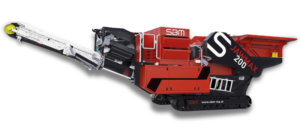
A jaw crusher is amongst one of the most popular crushers on the market. It uses a compressive force to break up different materials. it has two jaws, one is movable and the other is fixed, these jaws create a V-shaped chamber for material to feed into becoming crushed between the two jaws.
Characteristics of Jaw Crushers
- Durable with heavy construction
- Adequate for hard & abrasive materials
- Produces a uniformly sized particle
- High crushing throughput
How Jaw Crushers Operate
The actual crushing in a jaw crusher occurs between the fixed and moving jaw by compressing the material. This is continued until the material is the desired size and is released through the bottom opening.
Advantages of Jaw Crushers
- Durability: Made for heavy-duty crushing of hard materials
- High Efficiency: Large quantities of material can be processed
- Low Maintenance: Has fewer moving parts, making maintenance costs lower
- Uniform Output: Consistent size aggregate
Disadvantages of Jaw Crushers
- Size Limitations: Less effective in crushing finer materials
- Lower Reduction Ratio: This may require a secondary crusher for smaller output
- Higher Energy Consumption: Due to its power, it tends to utilize more energy than other crusher types
What is an Impact Crusher?
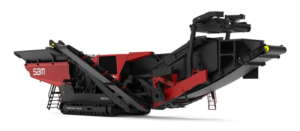
On the other hand, we have the impact crusher, which uses impact power to break materials. With a high-speed rotor and hammers or blow bars, it strikes the material and pushes it against a fixed impact plate.
Main Features of Impact Crushers
- High-speed operation for quick processing of materials
- Generates more shaped particles
- Ideal for soft to medium-hard materials
- Adjustable output size
Working of Impact Crushers
Feed material drops into the impact chamber, which encounters the spinning blow bars. The feed material is shattered into minute pieces by the high-impact blow, and the shattered material is ejected through adjustable openings.
Advantages of Impact Crushers
- Higher Reduction Ratio: Can crush materials to much lower sizes
- Better Shape: Produces well-shaped aggregate, suitable for road construction
- Versatility: It can be utilized for a variety of materials, including softer rocks
- Lower Energy Consumption: More efficient for some applications
Disadvantages of Impact Crushers
- Higher Wear and Tear: Impact plates and blow bars wear out faster
- Not Ideal for Hard Rocks: Less effective for very hard or abrasive rocks
- Higher Maintenance: Requires frequent inspection and wear part replacement
Jaw Crushers or Impact Crushers: A Comparison
Features
|
Jaw Crusher
|
Impact Crusher
|
|---|---|---|
| Crushing Method | Compression-based | Impact-based |
| Best For | Hard, abrasive materials Example: granite & concrete |
Softer to medium-hard materials ex. Example: limestone & asphalt |
| Reduction Ratio | Lower (needs secondary crushing) | Higher (finer output) |
| Shape of Output | More irregular, angular | More uniform, rounded |
| Energy Efficiency | Higher energy consumption | Lower energy consumption |
| Maintenance | Lower maintenance costs | Higher maintenance due to wear |
| Speed of Operation | Slower crushing process | Faster material processing |

Which Crusher is Best for Your Work Site?
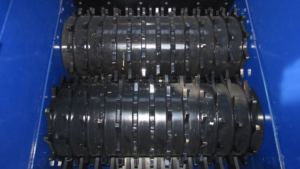
Select a Jaw Crusher If:
- You’re working with very tough, abrasive material like granite or concrete
- You need a less maintenance-prone machine with long-term reliability
- You need a primary crusher for multi-stage crushing
- High efficiency and high capacity are a priority for you
Choose an Impact Crusher If:
- You need finer, better-shaped aggregates for construction or road building
- You’re crushing softer materials like limestone or asphalt
- Speed and efficiency are a high priority for your operation
- You need a more significant reduction ratio with a single machine
Need Expert Advice For Choosing the Right Crusher?
Talk to the ProTrack Heavy Equipment Experts
Continually struggling between an impact crusher and a jaw crusher for your project? That’s where ProTrack comes in. With 25+ years of hands-on experience and a devotion to assisting contractors and construction professionals, we offer:
- Free Expert Consultation: Complimentary expert consultation to help you discuss your material needs and project site goals
- Heavy Equipment Solutions: To purchase, lease, or maintain, we’ve got the equipment and crushers to suit you
- Reliable Service & Support: Trust ProTrack for reliable maintenance, parts, and diagnostics
- Comprehensive Inventory: From impact crushers to jaw crushers and more, we get you the right tool for the job
Make your next project a success with the right equipment and the right support team behind you.
Take a look at our selection of Jaw Crushers and Impact Crushers.
Contact us today for a complimentary consultation, and let’s get it done together.
FAQs – Impact & Jaw Crushers
What is the key difference between impact crushers and jaw crushers?
Impact crushers use impact force to smash materials, whereas jaw crushers use compression force to crush materials.
Can we use impact crushers for hard materials?
Impact crushers can typically handle softer material. They can be used to crush harder material, but the wear on the equipment will be significantly more.
Which is more cost-effective in the long term?
Jaw crushers are less expensive to maintain in the long run because they have fewer parts, while impact crushers have more wear parts that will require frequent replacement.
Can I employ both impact and jaw crushers at the same job site?
Yes, most operations utilize a jaw crusher for primary crushing and an impact crusher for secondary crushing to achieve the desired material size.
Which crusher is most ideal for recycling material?
Impact crushers are generally more suitable for recycling since they can produce smaller and more processed aggregates.
How do I decide which to use, an impact crusher or a jaw crusher?
Consider the type of material you are working with, the final output size, productivity, maintenance, and budget.
Conclusion: Summarizing the Choice of an Impact Crusher or a Jaw Crusher
Both jaw crushers and impact crushers have their place, and each has its particular applications. You have complex, abrasive material, and you’re looking for durability; you’ll need jaw crushers. If you need finer, better-shaped aggregates and you’re dealing with softer material, an impact crusher might be just what you’ve been searching for.
By understanding the primary differences and keeping your job site needs in mind, you can make the proper selection to achieve optimum efficiency, productivity, and cost. Whether you use a jaw crusher or an impact crusher, Protrack has the ideal equipment and expertise to help you pick the most appropriate one for your venture.