
Rip Rap Processing Equipment in Canada
What Is Rip Rap
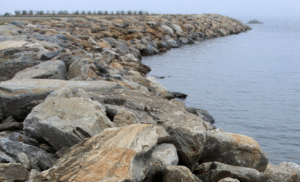
As demand for rip rap surges across Western Canada, it’s not only a matter of the right rock—but having the correct heavy equipment to complete accurate rip rap processing such as screeners, crushers and stockpilers. That’s where Protrack’s EDGE family of equipment comes in, offering unsurpassed performance.
Rip rap is large, rough stone—usually granite or limestone—intended to protect slopes, shorelines, and culverts by deflecting water and resisting erosion. It comes in sizes ranging from 4″ to over 24″, and it’s built to withstand minimal maintenance.
To meet sizing and placement demands in BC, Canada BC’s Riprap Design and Construction Guide can assist in reinforcing your equipment and productions.
This article talks about producing rip rap, how to estimate the amount you will require, how to know the expense, and what equipment to utilize in order to get it done—successfully.
How to Make Rip Rap
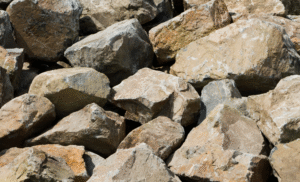
Rip rap cannot be obtained pre-made from the quarry—it must be processed using heavy-duty aggregate processing plant. This is how it works:
- Primary Crushing: Large boulders are fed into a jaw or impact crusher to break them up into angular fragments.
- Feeding System: Machines like the EDGE FS-Series Feeder Stockpiler get direct feed from excavators or loaders and feed into crushers.
- Rip Rap Screener & Sorting: After crushing, material is screened through a rip rap sorter or adjustable grizzly to eliminate oversized rock and meet specifications.
- Stockpiling: After sizing, rock is loaded to stockpilers like the EDGE TS-Series or MS-Series, creating controlled piles to maximize logistics.
ProTrack’s portable rip rap equipment packages integrate these systems in a mobile package, ideal for remote quarry applications or infrastructure construction.
Utilizing Rip Rap Sorters for Sizing
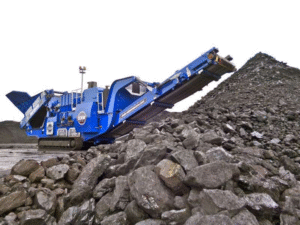
Proper sizing is imperative. Overly large rip rap is a waste of material; undersized rock won’t work. A rip rap sorter, like an adjustable grizzly, ensures in-spec material. With models ranging in capacity over 300+ TPH, Protrack has solutions that scale to meet the requirements.
EDGE sorters are used in conjunction with feeders to create a continuous process loop, thereby reducing rework and enhancing efficiency.
Efficient Rip Rap Stockpiling
Stockpiling is more than dumping material—it affects haulage, storage, and safety. Radial and conical stockpile capabilities give you layout flexibility with EDGE MS-Series stockpilers.
Wider belt widths (up to 48″) manage heavy aggregate flow, reduce spillage, and optimize loader cycles.
Feeding Rip Rap into Plants
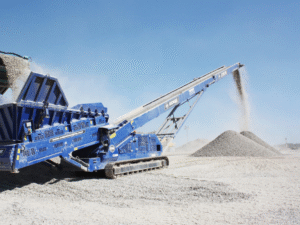
Feeding large rock pieces is a dangerous bottleneck—unless you have the right equipment. Protrack’s EDGE FS- and LTS-Series machines are designed for large, irregular, high-impact feed.
- FS-Series: Accepts direct material feed and meters evenly to crushers or screens.
- LTS-Series: Low-profile option for operations with height or space constraints, ideal for tight quarry setups.
Rip Rap Screener
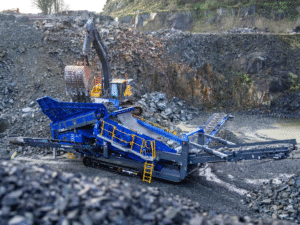
Protrack supports screening operations with heavy-duty rip rap screening and scalping screens that effectively handle rip rap. Effective screening removes fines and separates rock into Class A (large) and Class B (medium) gradations.
Unlike trommels or vibratory decks that suit finer material, these heavy-duty screens are engineered for angular, dense stone—minimizing wear and tear.
Handling High Volumes of Rip Rap
If you’re moving over 1,000 tons an hour, you need equipment that won’t back down. EDGE TS-Series Track Stockpilers will keep up with high-volume operations, delivering:
- 45’+ discharge height
- Track mobility across quarry terrain
- Minimized loader use with conveyor stacking
Whether stockpiling material for transportation or on-site use, TS-Series offers scalable solutions.
Portable Rip Rap Processing Plants: Complete Systems
Sometimes the project is mobile—and your equipment must be too. Protrack can equip portable rip rap plants with:
- Jaw/impact crushers
- Grizzly feeders
- Rip rap screener & sorters
- Mobile stackers
These modular installations cut transport, reduce setup time, and operate across construction sites, mines, or riverbank stabilization projects.
Protrack’s Top EDGE Equipment for Rip Rap Processing
|
Equipment |
Use Case |
Why It’s Perfect |
|
TS-Series |
Track stockpiling |
Handles coarse rock up to 1,200 TPH |
|
MS-Series |
Radial stockpiles |
Large conical piles with less loader work |
|
FS-Series |
Feeder + crusher feed |
Accepts big rocks directly from excavators |
|
LTS-Series |
Flexible site loading |
Side loading with low clearance |
|
RTU-Series |
Truck unloading |
Optional feed-in for high volumes |
Protrack’s EDGE Equipment for Rip Rap Workflows
When working with aggressive, heavy materials like rip rap rock, Protrack’s EDGE lineup is tailored for productivity, durability, and on-site handling efficiency:
| Equipment Series | Primary Function | Benefits & Applications |
|---|---|---|
| TS‑Series (Track Stockpilers) | Stockpile coarse rip rap (e.g., from crushers/screens) | Robust build, up to 1,200 TPH capacity, mobile on rough terrain, 13.9 m discharge height |
| MS‑Series (Mobile Stockpilers) | Create large conical/radial rip rap stockpiles | Up to 2,877 m³ stacking, 48″ belt, reduces loader dependency |
| FS‑Series (Feeder Stockpilers) | Feed large rock directly to crushers or sorters | Heavy-duty support, 13.4 m discharge, accepts uneven feed |
| LTS‑Series (Low Feed Stockpilers) | Handle high-impact loading from three sides | Flexible layout for large rock; ideal for quarry/rip rap environments |
| RTU‑Series (Truck Unloaders) | Intake rip rap from dump trucks into processing stream | Useful option—but watch for belt and hopper wear due to rock size |
How Much Does Rip Rap Cost?
Rip rap Average Costs in Canada:
- $20–$60 per ton
- $25–$75 per cubic yard, depending on size, quality, and location
- Example: Some retailers sell decorative-sized rip rap (8–24″ rocks) for $140 per cubic yard
- Speciality product lines or smaller orders can range from $50–$60 per ton
Is Rip Rap a Good Investment?
Benefits:
- Durable & long-lasting – Decades of service with minimal maintenance
- Easy maintenance and repair – Replace individual displaced stones, not entire sections
- Aesthetic and environmentally friendly – Vegetation support, habitat creation, and blending into surroundings
Considerations:
- Higher initial cost due to material volume and installation complexity
- Permitting and access to the site can be difficult, especially in controlled settings
- Environmental trade-offs—installation of rock can potentially damage some shoreline vegetation or habitat if not properly planned
Ready to Power Your Rip Rap Production?
Let Protrack help you build smarter, stronger, and faster. Whether you need mobile stockpilers, rip rap sorters, or complete portable plant systems, we’ve got the equipment and expertise to keep your operation moving.
✅ Get expert recommendations on the right EDGE equipment for your job site
✅ Request a custom quote tailored to your process and budget
✅ Book a live demo to see our machines at work across Western Canada
📞 Call us at 778-900-4595
Fill out our contact form today.
Partner with Protrack—where performance meets precision.
Wrapping Up
Rip rap is more than just big rocks—it’s a precision-engineered product essential for protecting landscapes and infrastructure. From crushing and feeding to screening and stockpiling, Protrack’s EDGE equipment lineup offers the complete toolkit for efficient, reliable rip rap processing in Western Canada.
By investing in the right tools and workflow, you’ll reduce waste, increase productivity, and deliver top-quality results that last for generations.
FAQs
How much rip rap do I need?
Compute project size to tonnage through volume calculators online. Most rip rap weighs around 1.5 tons per cubic yard.
What does rip rap cost per ton in Canada?
Between $25 and $60 per ton, depending on supplier and rock.
What equipment do I employ to create rip rap?
A series of feeders, crushers, screeners, and stockpilers—all available through Protrack.
Can rip rap be done manually?
Small projects could be allowed for hand installation, but larger installations require grading machines and excavators.
Is it worthwhile to invest in portable equipment?
Yes—Protrack’s EDGE portable solutions reduce setup time and improve workflow on out-of-the-way jobsites.
For how long will rip rap last?
Up to 70–100 years of erosion protection can be expected with proper installation and maintenance.